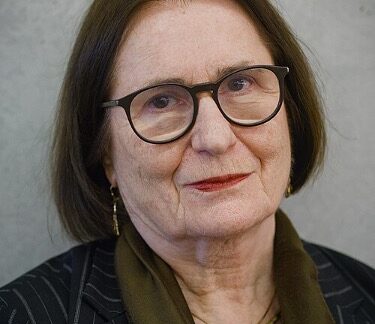
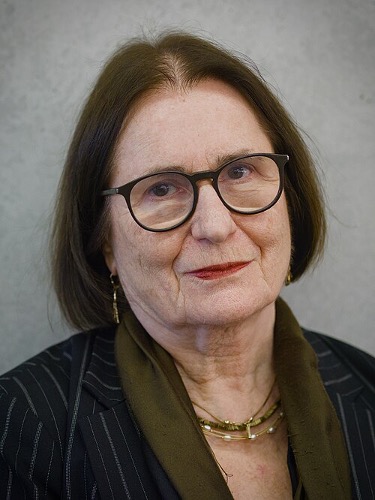
Historian and human right activist. Her research interests include oral history, totalitarianism, Stalinism, the Gulag, the Soviet special camps on German land after 1945, cultural memory in Russia, and the politics of remembrance. In the late 1970s, she began recording interviews with victims of Stalinism. In 1989, along with prominent civil rights activists, she co-founded the International Historical Educational Charitable and Human Rights Society Memorial (Moscow) where she worked until it was definitively banned by the Russian government, in 2022. In 1991, she began studying the KGB archives.
Following her years of work for different journals, she became a fellow at the Wissenschaftskolleg in Berlin as well as at the Institute for Human Sciences in Vienna. She was a guest professor at the University of Salzburg and at the Friedrich-Schiller-Universität Jena, and a lecturer at the Center for Oral History at the Russian State University for Humanities in Moscow. Among Scherbakova’s most important works in German are Nur ein Wunder konnte uns retten. Leben und Überleben unter Stalins Terror (Only a miracle could save us. Life and survival under Stalin’s Terror, 2000), Der Russland-Reflex. Einsichten in eine Beziehungskrise (The Russia reflex. Insights into a relationship crisis, 2015) and Die Hände meines Vaters. Eine russische Familiengeschichte (The hands of my father. A Russian family history, 2017). She has also co-authored and edited multiple publications based on Memorial’s archive.
Shcherbakova’s humanitarian work has been recognized with prestigious international awards that include Nobel Peace Prize (2022). While the prize was awarded to the organization Memorial (alongside Ales Bialiatski and the Center for Civil Liberties), she is celebrated as one of its most prominent leaders and co-founders. After the Russian invasion of Ukraine and the dissolution of Memorial, Scherbakova left her homeland, and moved abroad. Together with her colleagues from MEMORIAL, she has co-founded Zukunft MEMORIAL that continues the work they begun back in Moscow.